This recipe started the way a lot of weeknight dinners do: chicken thighs in the freezer, potatoes on the counter, and the need to feed people without turning it into a whole thing. What I ended up with was a fast, bright herb marinade and some crowd-pleasing simple af garlic potatoes. Fresh herbs can make the marinade greener and louder, but dried work just fine when that’s what you have.
Snapshot
- Implements: two sheet pans; blender or immersion blender; mixing bowls
- Oven setting: start at 450°F (232°C), then reduce to 425°F (218°C)
- Batch size: serves about 3 people
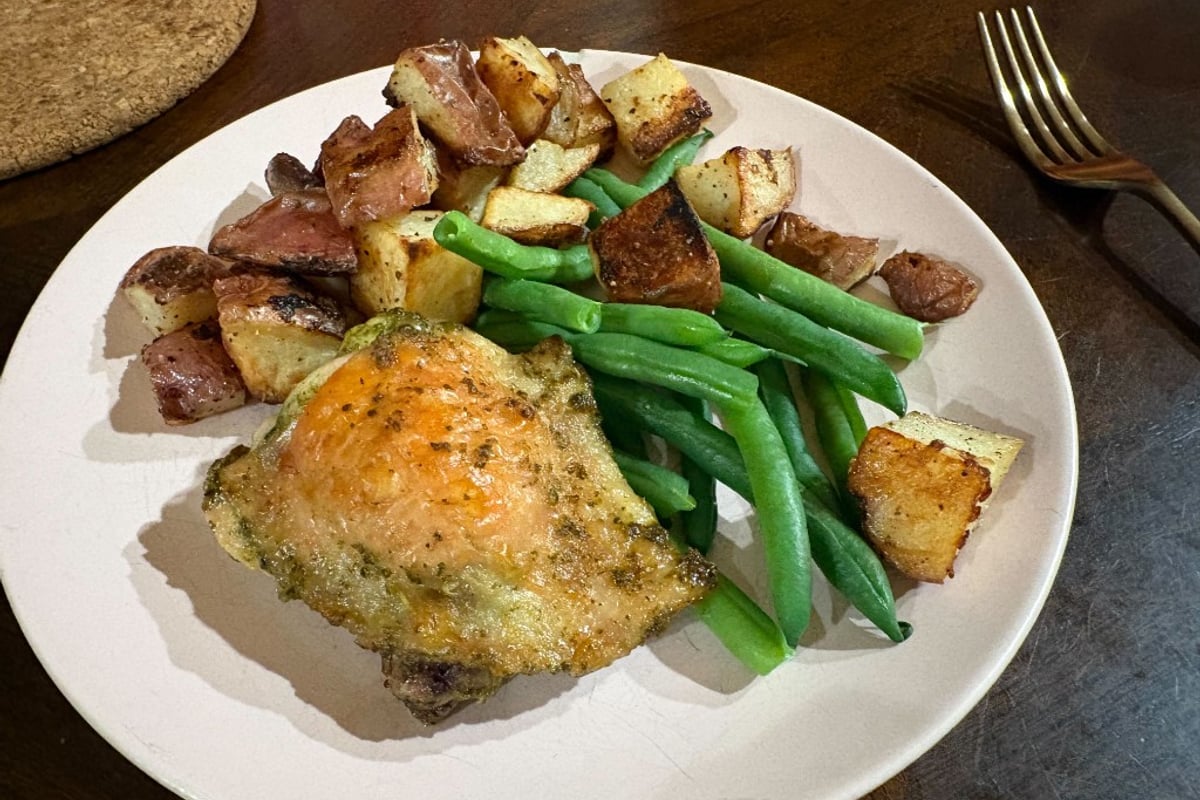
Herb-roasted chicken thigh with crispy garlic-pepper potatoes and green beans.
Ingredients
Herb marinade (makes about 1 cup)
- 2 small sprigs fresh rosemary, needles only
- ½ cup fresh oregano, loosely packed
- ¾ cup fresh parsley
- 2 Tsp fresh thyme leaves
- 4 cloves garlic
- 2 Tsp Dijon mustard
- 2 Tsp red wine vinegar
- ½ cup olive oil
- 1½ Tsp kosher salt
- 1 Tsp black pepper
Chicken
- 4 bone-in, skin-on chicken thighs
- ½–⅔ cup herb marinade
Garlic-pepper potatoes
- 2 lb red potatoes, medium dice
- 2½–3 Tbsp olive oil or duck fat, melted
- 1½ Tsp garlic powder
- 1¼ Tsp freshly ground black pepper
- 1¼–1½ Tsp kosher salt
Finishing (Optional)
- Lemon juice
- Flaky salt
Method
Blend the marinade
Add all marinade ingredients to a blender or wide-mouth pint jar. Blend until smooth and pourable. Texture should resemble a thin green dressing. Coat chicken in marinade in a bowl or bag and allow to rest at room temp while you prep the potatoes.
Start the potatoes
Heat oven to 450°F (232°C). Toss potatoes with olive oil or duck fat, garlic powder, black pepper, and salt. Spread in a single layer on a sheet pan and roast for 10 minutes.
Add chicken and adjust heat
Wipe down the chicken thighs, leaving a thin coat of marinade. Lower oven to 425°F (218°C). Arrange chicken skin-side up on a separate sheet pan and add to the oven.
Roast until done
Roast until potatoes are browned and tender (35–45 minutes total) and chicken skin is deeply golden with an internal temperature around 175°F (79°C).
Optional broil
For extra crisp skin, broil chicken for 2–3 minutes at the end. Watch closely.
Rest and finish
Rest chicken 5–10 minutes. Finish chicken and potatoes with a small splash of lemon juice and flaky salt.
Notes, swaps, and guardrails
Marinade timing
This marinade works on contact. Thirty minutes to two hours in the fridge gives the best balance of flavor and texture, but even a short rest while the oven heats is worthwhile. Do not marinate longer than 4 hours. If short on time, toss and roast immediately.
Using dried herbs
Dried herbs can be substituted, but reduce aggressively. Use about ⅓ the volume of dried herbs in place of fresh.
- 3 Tbsp dried parsley
- 2½–3 Tbsp dried oregano
- 2 Tsp dried thyme
- 1½ Tsp dried rosemary
The flavor will be less bright and less green, but still good.
Blending small batches
For small-volume marinades, a wide-mouth pint jar and an immersion blender work better than a full-size blender or food processor. The narrow container keeps the herbs moving so they break down instead of riding the sides.
Duck fat option
Duck fat gives deeper browning and a richer, savory finish on the potatoes. Use it exactly like olive oil. Do not increase the amount.
Why the oven starts hot
The brief 450°F (232°C) start is for the potatoes, not the chicken. Potatoes need early surface dehydration to brown properly. Starting hotter jump-starts browning so they finish tender and crisp without extending total cook time.
After 10 minutes, the oven drops to 425°F (218°C), which is the real working temperature. Bone-in, skin-on chicken thighs render fat and crisp skin best in this range, reaching about 175°F (79°C) without drying out.
This staggered heat is what lets both pans finish together. If everything starts at 425°F, the potatoes lag or the chicken waits. The hot start solves that.
If your oven runs hot or you are using thin sheet pans, you can start the potatoes at 435–440°F instead. Do not cook the entire dish at 450°F.
- Do not overcrowd the pans.
- Do not marinate overnight.
- Do not skip drying the chicken skin.